Disability Benefits for Seniors in Ontario
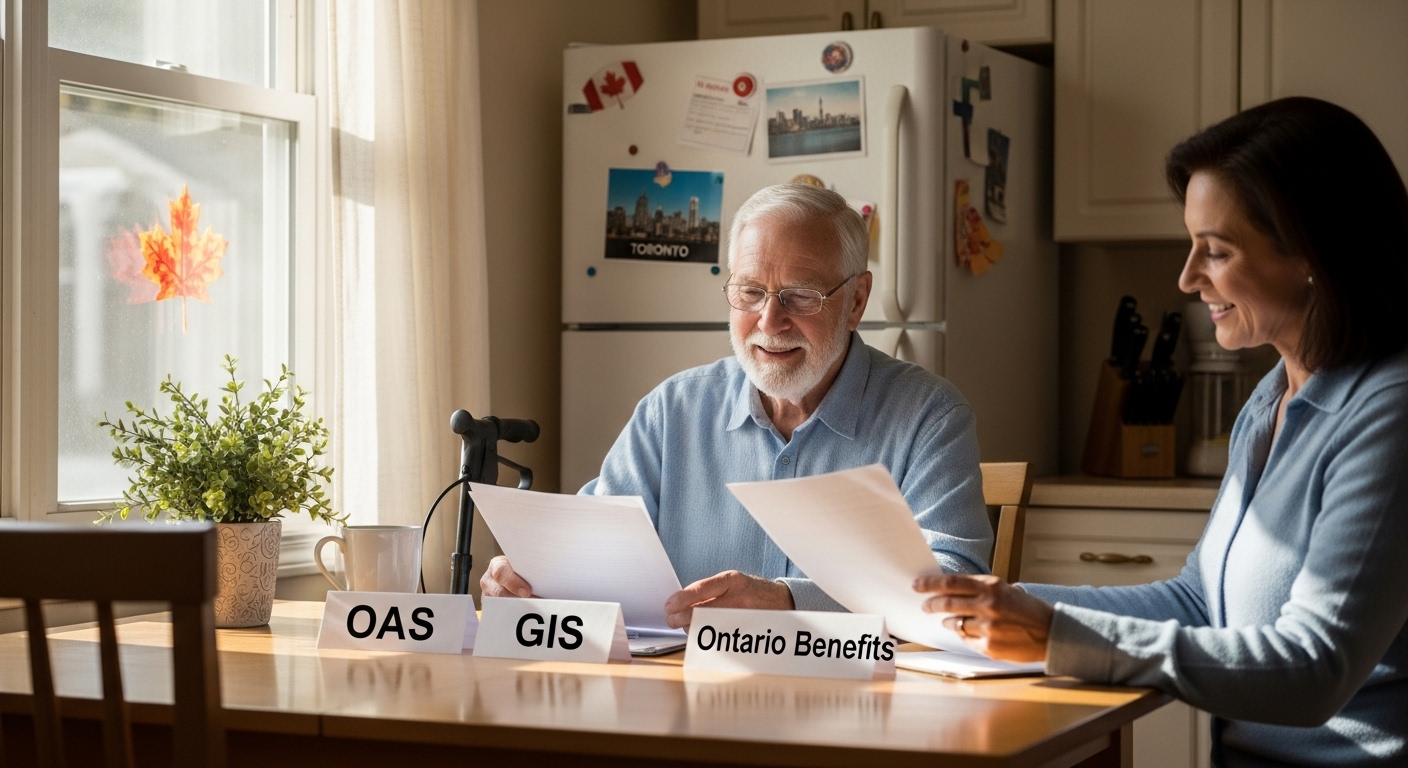
As we get older, everyday life can become more challenging—especially for seniors living with health issues or disabilities. Whether it’s managing mobility concerns, medical expenses, or reduced income, many older Canadians face financial and physical barriers that make daily living harder than it should be. Fortunately, there are several disability benefit programs in Ontario designed to help seniors maintain independence, dignity, and quality of life.
If you or a loved one is navigating life with a disability in your senior years, understanding what support is available—and how to access it—can make a world of difference.
From federal programs like CPP Disability and the Disability Tax Credit (DTC) to provincial supports such as ODSP, the Assistive Devices Program, and the Ontario Seniors Dental Care Program, knowing how these benefits work (and how they fit together) can help you maximize your income and reduce stress in retirement.
Why You Should Read This Guide
Most seniors miss out on benefits they qualify for simply because the system feels overwhelming or confusing. This guide breaks everything down in plain English—no jargon, no government-speak—so you can clearly understand:
What disability benefits you’re entitled to in Ontario
How to apply and get approved faster
How to combine federal and provincial benefits without losing money
What extra programs can help cover healthcare, medication, or mobility costs
Whether you’re applying for yourself, helping a parent, or just planning ahead for your retirement years, this resource is your one-stop reference for disability support for Ontario seniors.

Who Qualifies for Disability Benefits in Ontario
As someone who’s lived in Ontario for most of my life, I’ve come to realize that understanding who actually qualifies for disability benefits isn’t always straightforward.
When I first looked into it myself, I found the information scattered across federal and provincial websites. Here’s what I learned after a few phone calls to ServiceOntario and chatting with an advisor at our local Seniors’ Centre in Mississauga.
To qualify for most disability benefits in Ontario, you typically need to:
Be a Canadian citizen or permanent resident living in Ontario.
Be 18 years or older (though most senior-focused programs start at age 60 or 65).
Have a medically recognized disability that restricts your daily activities or ability to work. This can include chronic pain, arthritis, mobility issues, vision loss, or degenerative conditions like Parkinson’s or MS.
Provide medical documentation signed by a licensed practitioner, such as your family doctor, nurse practitioner, or specialist.
Meet income requirements, depending on the program (for example, ODSP and GIS have income caps to ensure the support goes to those who need it most).
When I applied for my Disability Tax Credit, I had to fill out Form T2201 and have my doctor confirm that my condition was both “severe and prolonged.” It took a few months, but once approved, it made a real difference at tax time, I could claim retroactive credits for up to ten years!
The key takeaway? Each benefit has its own rules. If you’re unsure, it’s worth calling 1-800-277-9914 (Service Canada) or visiting your local Ontario Disability Support Program office. They can walk you through what you might qualify for based on your income and health.
Federal Disability Programs Available to Seniors
Living with a disability in retirement can be challenging, both physically and financially, but thankfully, there are several federal programs designed to help seniors like us across Canada. Here’s how I’ve seen them make a difference.
Canada Pension Plan Disability (CPP-D)
If you’ve worked and contributed to CPP during your career, you may qualify for CPP Disability before you reach 65. I learned about this when my neighbour John in Burlington started receiving CPP-D after developing a heart condition.
Once you turn 65, your CPP-D automatically converts to regular CPP retirement payments, so you don’t lose coverage.
You can apply online through Service Canada. Payments depend on your previous CPP contributions — the average monthly amount in 2025 is around $1,250, though it varies by case.
Tip: Keep copies of your tax returns and medical forms, CPP-D requires detailed proof of both your disability and your work history.
Old Age Security (OAS) & Guaranteed Income Supplement (GIS)
Once you hit 65, you’re likely eligible for OAS, Canada’s universal pension. If your income is modest, you might also qualify for the Guaranteed Income Supplement (GIS). Many disabled seniors I’ve met at the Peel Seniors’ Centre rely on this combo, it can add up to $1,000+ monthly in support for low-income seniors.
Applying for OAS is simple if you’ve lived in Canada for at least 10 years after age 18. If you’re already receiving CPP, Service Canada may automatically enroll you for OAS, but it’s worth checking your My Service Canada Account to confirm.
Disability Tax Credit (DTC)
The DTC is one of the most valuable, yet underused, benefits for older Canadians. It’s a non-refundable tax credit that can reduce the amount of income tax you pay. I first heard about it through a free CRA information session hosted by our local library.
Once approved, you can also transfer unused credits to a spouse or caregiver.
You’ll need your doctor to certify your condition on the T2201 form, which you can download from the CRA website or pick up at a Service Canada office.
Many seniors also use the DTC approval to open a Registered Disability Savings Plan (RDSP), a government-supported savings account that matches your contributions up to $70,000 over a lifetime.
Ontario-Specific Disability Support Programs
While the federal programs are great, Ontario also provides its own supports — and these can make a real difference in day-to-day living. After navigating these myself, I can say: these programs really do help if you know how to access them.
Ontario Disability Support Program (ODSP)
The ODSP provides financial and medical assistance to people with disabilities who have limited income. Although ODSP usually covers those under 65, seniors can still apply if their disability began earlier or if they’re transitioning from ODSP to OAS/GIS.
I met a woman in our seniors’ yoga group who still received ODSP support to cover her mobility device even after retiring. Her caseworker helped her transition to OAS and GIS while keeping certain ODSP medical benefits.
The ODSP monthly support can include:
Income support for rent, food, and basic needs
Prescription drugs, dental, and vision coverage
Assistance with special diet costs or medical travel
You can apply through your local ODSP office or via the Ontario.ca website.
Assistive Devices Program (ADP)
As someone who uses a mobility scooter, the Assistive Devices Program has been a blessing. The ADP covers up to 75% of the cost of mobility aids, hearing aids, and home oxygen equipment. I got mine through a certified vendor, the application process required a doctor’s referral and an assessment by a registered authorizer.
You can find a full list of approved devices and authorizers on Ontario.ca/adp.
Ontario Seniors Dental Care Program (OSDCP)
If you’re over 65 and your income is modest, the OSDCP gives you free dental care through community clinics. My own dentist in Hamilton helped me apply. It covers check-ups, fillings, dentures, and extractions, and it’s one of the most appreciated programs for seniors living on fixed incomes.
Ontario Drug Benefit (ODB) Program
The Ontario Drug Benefit program automatically kicks in once you turn 65. It covers most prescription drugs listed in the provincial formulary. I use it for my blood pressure medication, and I only pay a small co-payment of $2 per prescription because I qualify for the low-income threshold.
To check which drugs are covered, visit ontario.ca/page/ontario-drug-benefit-program or ask your pharmacist to confirm your eligibility.
Applying for Disability Benefits: My Step-by-Step Experience
When I first started applying for disability benefits here in Ontario, I’ll admit — it felt a bit overwhelming. Between the forms, the doctor’s reports, and the waiting time, it’s easy to lose track. But once you know the process, it becomes manageable.
Here’s how I handled it, and what I learned along the way.
Step 1: Gather Your Documents
Before doing anything else, make sure you have all your paperwork ready. I needed:
My Social Insurance Number (SIN)
Proof of age and residency (I used my Ontario driver’s license)
Medical documentation from my family doctor confirming my condition
My Notice of Assessment from the CRA (for income verification)
If you’re applying for ODSP, your doctor or nurse practitioner will have to complete the Disability Determination Package, which they send directly to the ODSP office.
Step 2: Apply Online or In-Person
I applied for ODSP through Ontario.ca/ODSP, but you can also visit your local ServiceOntario centre if you prefer talking to someone face-to-face (I did that for my OAS and CPP applications, much easier).
For federal benefits like the Disability Tax Credit or CPP Disability, you’ll find all forms on Canada.ca. You can even sign in with your My Service Canada Account to track your application status.
Step 3: Wait and Follow Up
Processing times vary, my CPP Disability took about 4 months. ODSP took a bit longer. If it’s been more than 90 days, don’t hesitate to call or visit your local office. Keeping a file with copies of every form and letter really helped me stay organized.
Pro Tip: Keep a list of the agents you talk to (names and dates). It helps if there’s ever confusion later.
Combining Multiple Benefits (What I Learned the Hard Way)
If you’re like me, retired but living with a disability, you might qualify for more than one type of support. The tricky part is figuring out how they interact.
CPP, OAS, and ODSP — Can You Have All Three?
Here’s what I discovered:
Once you turn 65, your CPP Disability usually converts to a regular CPP retirement pension.
You’ll also start receiving Old Age Security (OAS), which is based on your years in Canada.
If your total income (CPP + OAS) is low enough, you can apply for the Guaranteed Income Supplement (GIS) a lifeline for many of us.
However, if you were already on ODSP, those payments may end once you qualify for OAS, because ODSP is meant for people under 65. That said, ODSP staff can help you transition smoothly so there’s no gap in your income.
Income Clawbacks and Reporting
One important lesson: always report changes in your income to ServiceOntario or CRA. Even something small like a one-time pension payout or part-time work can affect your GIS or OAS supplements.
Example: When I started receiving a small private pension, my GIS went down slightly. I didn’t like it, but at least I understood why.
Tax and Credit Tips
Don’t forget about the Disability Tax Credit (DTC) even after retirement, it can save you hundreds of dollars in taxes every year. You can also transfer unused credits to your spouse.
I got help from a free tax clinic through the Canada Revenue Agency’s Community Volunteer Income Tax Program (CVITP) a great resource for seniors.
Appeals and Reconsideration Process (If You’re Denied Benefits)
Not every application goes smoothly. My first ODSP application was denied, even though my condition clearly affected my daily life. It was frustrating, but I didn’t give up — and you shouldn’t either.
Step 1: Understand Why You Were Denied
The denial letter usually lists the reason. In my case, the medical reviewer didn’t think my condition “substantially restricted” my daily activities. I asked my doctor to write a more detailed statement explaining how even small tasks, like standing too long, were difficult.
Step 2: Ask for an Internal Review
You have 30 days from the date of the letter to request an Internal Review for ODSP or Reconsideration for CPP Disability.
I did mine in writing, you can email or mail it to the address listed on your decision letter.
Step 3: Seek Help from an Advocate
Don’t go through it alone. I reached out to a community legal clinic in my area (Toronto North Legal Services), and they guided me through the paperwork for free.
Other great resources include:
ARCH Disability Law Centre (Ontario-wide)
Community Legal Education Ontario (CLEO) — they have excellent plain-language guides
ServiceOntario and Service Canada hotlines
If your internal review is still denied, you can appeal to the Social Benefits Tribunal (for ODSP) or Social Security Tribunal (for CPP). It sounds intimidating, but most seniors win their case when they have proper documentation and advocacy support.
“Don’t be afraid to speak up. These programs exist because we’ve paid into them all our lives — we deserve to access them when we need them.”
Additional Support Programs and Community Resources
As someone living with a disability here in Ontario, I’ve learned firsthand that there’s a lot more support available than most of us realize, but you have to know where to look. Beyond government benefits like CPP-D or ODSP, there are local organizations, non-profits, and community programs that make life easier for seniors like us.
Community and Advocacy Organizations
One of the best places I turned to early on was the Ontario Disability Support Network (ODSN), they keep you informed about new funding programs and rights for people with disabilities. Similarly, the March of Dimes Canada offers fantastic support for seniors, including home modifications, assistive technology, and even help with transportation to medical appointments.
If you live in a city like Toronto, Ottawa, or Hamilton, you’ll also find local Seniors’ Centres that offer disability-inclusive fitness programs, social activities, and workshops on managing chronic pain or mobility issues. Many are funded through Ontario Health Teams (OHTs) or the Municipal Accessibility Programs.
Homecare and Accessibility Grants
For those of us aging in place, the Ontario Renovates Program and Canada’s Home Accessibility Tax Credit (HATC) can make a big difference. Through Ontario Renovates, I was able to apply for a small grant to install grab bars in the bathroom and a stair lift. It’s not just about comfort, it’s about safety and independence.
Non-Profit and Local Assistance
I also found comfort in organizations like Community Care Access Centres (CCAC) and Home and Community Care Support Services Ontario. They connected me with a personal support worker (PSW) who helps with light housekeeping and meal prep. If you live in smaller towns, your local public health unit often runs senior outreach programs that can help with transportation or social visits.
Another hidden gem is the Seniors’ Centre Without Walls, a free telephone-based program that offers group chats, health education, and friendly calls for homebound seniors. Sometimes, just hearing another voice makes a world of difference.
Faith-Based and Cultural Groups
Many churches, mosques, temples, and cultural associations across Ontario also offer disability-friendly social services, from food programs to community transport. I’ve seen firsthand how faith groups fill in gaps where government services might not reach.
Financial Planning for Seniors with Disabilities
Money management becomes even more important when you’re living with a disability and I say that from experience. Between medical bills, assistive devices, and everyday expenses, it’s easy for costs to sneak up. But with a few smart moves, you can stretch your income and access resources designed specifically for Canadians with disabilities.
Balancing Benefits and Retirement Income
Many of us receive a mix of supports — maybe ODSP, CPP, or OAS. What I’ve learned is that understanding how these interact is key. For example, if you’re transitioning from CPP Disability (CPP-D) to regular CPP at 65, your benefit automatically converts, but your overall monthly income might change slightly. It’s worth reviewing your budget around that time.
The Guaranteed Income Supplement (GIS) is another important one, especially for low-income seniors with disabilities. It’s non-taxable and can add a few hundred dollars each month. You don’t need to apply separately if you’re already getting OAS; the CRA usually adjusts it automatically after you file taxes.
Tax Credits and Savings Tools
A lot of seniors overlook the Disability Tax Credit (DTC) — it can reduce your income tax and sometimes even result in a refund if you qualify. I worked with my doctor to fill out the form, and the process was smoother than I expected.
If you qualify for the DTC, you can also open a Registered Disability Savings Plan (RDSP). The best part? The government can match your contributions through Canada Disability Savings Grants, up to $3,500 per year depending on your income. Even small monthly deposits add up over time.
Other Helpful Financial Resources
If you own your home, consider the Ontario Property Tax Deferral Program for Low-Income Seniors, it lets you defer property taxes until you sell your home or transfer ownership. It gave me breathing room when expenses piled up.
For day-to-day savings, many banks like RBC, TD, and Scotiabank have specialized senior banking packages that waive monthly fees or offer perks like free cheques and overdraft protection. It’s worth calling your branch and asking, sometimes you get more just by inquiring.
Planning Ahead
Lastly, it’s wise to speak with a Certified Financial Planner (CFP) who understands disability benefits and senior income streams. The Financial Planning Standards Council of Canada has a directory where you can find professionals who specialize in retirement and disability planning.
I’ve found that peace of mind comes not just from the money you have, but from knowing it’s managed wisely and that you’re not missing out on support you’re entitled to.